



The Role of Expert Witnesses in Lawsuits
In Texas and throughout the country, expert witnesses in lawsuits heavily influence the outcome, especially in complex personal injury or medical malpractice cases. When a Texas injury trial involves complicated medical procedures, structural engineering failures, or intricate financial projections, a jury of laypeople can’t be expected to know the answers. Expert witnesses bridge the gap between complex technical facts and the jury’s understanding.
Knowing who these experts are and what they do is vital for anyone navigating the legal system. Their involvement is often the deciding factor between a dismissed claim and a fair settlement. Below, we examine the specific roles these professionals play throughout the litigation process.
What Is an Expert Witness?
An expert witness is distinct from a fact witness. A fact witness is someone who saw or heard the accident happen, such as a bystander who saw a car run a red light. They can only testify to what they personally perceived.
By contrast, an expert witness is a professional permitted to offer an opinion in court based on their specialized knowledge, skill, experience, training, or education. Under the Federal Rules of Evidence, these individuals assist the judge or jury in understanding evidence that requires scientific or technical explanation. They don’t have to be present at the accident scene. Instead, they review the evidence, apply scientific methods, and form an objective opinion to help the court determine the truth.
Why Experts Are Essential for Strengthening a Case
In high-stakes litigation, “he said, she said” arguments are rarely upheld. You need objective proof. A personal injury case expert provides the evidentiary backbone for three critical elements of a lawsuit:
- Establishing Liability – Sometimes, fault isn’t obvious. In a product liability case involving a car that rolled over, a jury must determine whether the driver was speeding or if the car’s suspension was defectively designed. An engineering expert can analyze the physics of the crash to prove that the manufacturer was liable, not the driver.
- Proving Causation – This is often the most contested part of an injury claim. A defense lawyer might argue that a plaintiff’s back pain is due to old age or a pre-existing condition, not the car crash. Medical experts are required to connect the specifics of the accident to the injury that has been diagnosed.
- Quantifying Damages – If a young father is permanently disabled, how do you calculate the wages he would have earned over the next 30 years? You can’t simply guess. Financial experts use actuarial tables and economic data to calculate a precise figure for “lost future earning capacity,” ensuring the settlement covers a lifetime of needs.
Common Types of Expert Witnesses
Different cases require different types of expertise. Here are the most common experts utilized in civil litigation:
- Medical Experts – These are physicians who testify about the nature of injuries, the necessity of surgeries, and the prognosis for recovery. While a plaintiff’s treating physician can testify as a fact witness regarding the care they provided, a retained medical expert is often brought in to offer a broader opinion on long-term disability ratings or causation.
- Accident Reconstructionists – Often used in vehicle collision cases, these experts use physics, mathematics, and software to recreate a crash. They analyze skid marks, vehicle crush profiles, and “black box” data to determine vehicle speeds and impact angles.
- Vocational Experts – When an injury prevents a person from returning to their old job, a vocational expert assesses their employability. They analyze the local labor market to determine what jobs the plaintiff can still perform despite their physical limitations.
- Forensic Economists – These experts calculate the present value of future financial losses. They account for inflation, wage growth, and life expectancy to assign a dollar value to complex financial damages.
- Life Care Planners – For catastrophic injuries requiring 24/7 care, home modifications, or lifelong therapy, a life care planner outlines every medical need the victim will have for the rest of their life and the associated costs.
How Experts Are Admitted in Court
Just because someone has a degree doesn’t mean they can testify. The court acts as a gatekeeper to ensure that only reliable science enters the courtroom. Most courts follow standards derived from a Supreme Court case known as Daubert v. Merrell Dow Pharmaceuticals. Under this standard, the judge looks at several factors before letting an expert take the stand:
- Has the expert’s theory been tested?
- Has it been subjected to peer review and publication?
- Is there a known error rate?
- Is the methodology generally accepted in the scientific community?
The Expert Witness Process at Trial
Experts do more than sit at the witness stand. Their work begins months or years before a trial. Here’s what’s included in the process:
- Review and Analysis – The expert reviews medical records, police reports, and depositions.
- The Expert Report – Under federal rules, retained experts must submit a comprehensive written report detailing every opinion they hold, the data they used, and their exhibits. This allows the other side to see exactly what the expert will say.
- Deposition – Opposing counsel will interview the expert under oath to try to find holes in their logic or credentials.
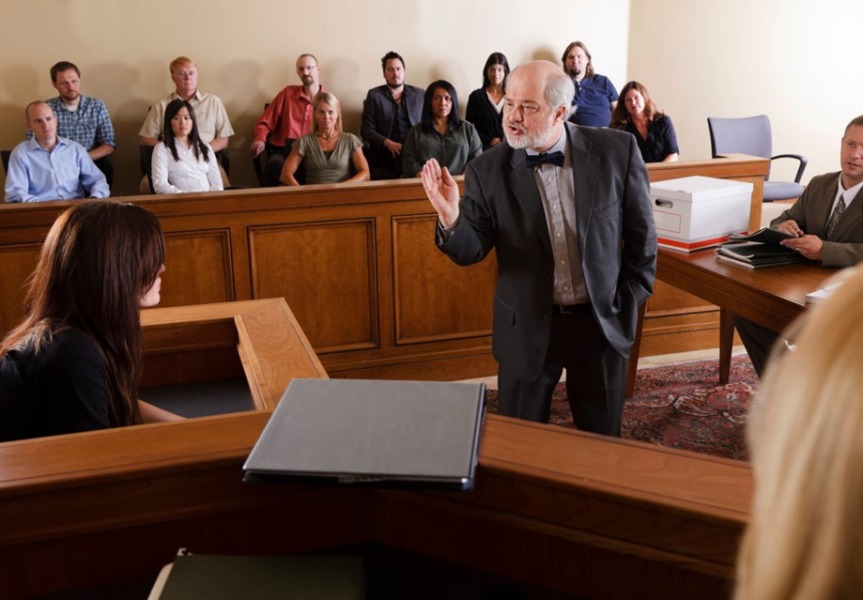
- Trial Testimony – Finally, the expert explains their findings to the jury, often using visual aids to make complex science easy to understand.
Ensuring Justice Through Professional Analysis
Most lawsuits never reach a courtroom. However, expert witnesses in lawsuits are just as valuable in settlement negotiations. When an attorney presents a detailed report from a respected neurosurgeon or a top-tier accident reconstructionist, it signals to the insurance company that the plaintiff is ready for trial. This undeniable proof often pressures the defense into offering a fair settlement to avoid a losing battle in court. Expert witnesses are essential tools for uncovering the truth. By translating complex technical data into clear, compelling evidence, they ensure that justice is based on facts rather than assumptions. For more information on how these professionals can make or break your lawsuit, contact Nava Law Group today.